by Marty Coleman | Oct 11, 2012 | The Judge Knot - 2012 |
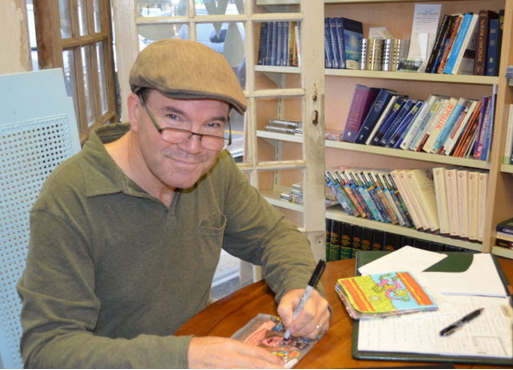
I got roped into drawing Judge Knot #4 today!

Murder Suicide
I hate hearing about murder suicides. It’s always so completely tragic in every way. It’s the same with judgment. It kills you and the one you are judging. Now obviously I am not talking about physical death. I am talking about emotional damage.
Damage to Yourself
Being a judgmental person stifles you. It stunts your growth, diminishes your joy and shrinks the beauty of the world around you. I wraps you up like a cowboy ropes a calf, immobilizing you and keeping you from movement.
Getting to Know You
In the meanwhile you are hurting someone else. It’s possible you could be judging and the other person or people don’t even know it. And in that case you might think they aren’t being damaged. But I think they are, for no other reason then they don’t get the opportunity to know you. You might not be worth knowing but I doubt it. I bet you are worth knowing and you judging them keeps them away from you. You aren’t going to let them in. That is good if the person is rightly judged a creep or a danger in some ways. But what if your judgment is due to the color of their skin, or their zip code, or the club they belong to? Then what? Is there a legitimate reason not to know them, to let them know you? No, there isn’t.
In Your Face
What about when what you say, your judgment, does make its way back to the person? What if you say it directly to them? Once again, if it’s based on real reasons then perhaps the judgment needs to be spoken. But if not, if your judgment is frivolous and made for social reasons, not real ones, then you are damaging that person on purpose. You are purposely inflicting emotional pain on that person. And for what reason? To make you feel better about yourself or to look better in the eyes of someone else. It’s an ugly thing to witness and the person doing it is being ugly, no matter how pretty they are.
_____________________
Drawing, quote and commentary by Marty Coleman
_____________________
Fact of the Day
Supreme Court Justice Samuel Chase was the only justice ever to be impeached by the U.S. House of Representatives (1804). He was acquitted of all charges by the U.S. Senate (1805). He also was a signer of the Declaration of Independence.
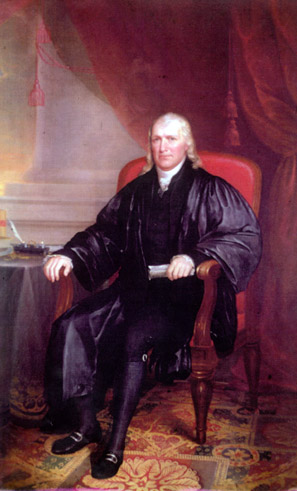
Samuel Chase, 1741-1811
_____________________
Like this:
Like Loading...
by Marty Coleman | Oct 10, 2012 | The Judge Knot - 2012, Walt Whitman |
I judge it to be day 3 of ‘Judge Knot’ week!

Will You Die?
In spite of the cliche ‘curiosity killed the cat’ what being curious does is teach you that you will not die (because you are not as stupid as a cat I hope). You will not die from appreciating the woman with the striped toenails at the public pool. You will not die from appreciating your co-worker with a lot of tattoos. You will not die if you eat at an exotic food at a restaurant representing a country you are unfamiliar with. You will not die if you have a date with someone of a different race than you.
Untying the Judge Knot
Do you want to untie your Judge Knot? Be curious. Curiosity doesn’t mean you don’t judge. It means you reserve judgment until you have knowledge. It means you don’t judge based on prejudice and bigotry. It means you hold your judgments and opinions lightly, being willing to change them when good evidence and strong ideas lead you to change them. I am a big judger. I judge and I believe in judging. I just don’t believe in doing it before my curiosity has had a chance to work. After I have found out about something I feel fine making a judgment. I then hold the judgment lightly and reserve the right to change my mind, which I often do.
That is how humans progress after all, right?
______________________
Drawing and commentary by Marty Coleman
Quote by Walt Whitman
______________________
Curiosity of the Day
Walt Whitman first published his famous collection of poems ‘Leaves of Grass’ in 1855. He continued to produce new editions with new material for 36 years, until his self-titled ‘Deathbed Edition’ in 1891. He died in 1892.

Walt Whitman by Thomas Eakins
______________________
Like this:
Like Loading...
by Marty Coleman | Oct 9, 2012 | The Judge Knot - 2012 |

Me See vs You See
How do you see yourself? I photograph a lot of people and I always assume that how I see them will not be how they see themselves. I will more than likely think they are prettier, thinner, healthier, more colorful, more stylish, more confident looking than they think they are. Now, part of this is the obvious result of them knowing themselves better than I know them. They see the scars, they see the lack of muscle tone, they see the sags or pasty coloring that I don’t see. But even if I do see those things I am still not understanding their place the way the owner of those things understands them. That is to be expected.
You See vs You Judge
The more important question is, how do you see yourself? Is your awareness of some element of your face or body overwhelmed with negative judgment or is it just an acknowledgement? For example, let’s say you (talking to a woman here), notice that your skin is a bit pale lately as summer ends and fall begins. You put on a bit more blush and a brighter shade of lipstick to compensate for the paleness and you are good to go. If you had to go out without the blush and lipstick you would be ok, but you have the time to add it so you do. You feel good and unself-conscious.
Compare that to you not just seeing yourself as a bit pale but as judging yourself as ugly and unacceptable for being pale. You are judging yourself but part of that judgment is projecting a world full of judges you must face when you go out. You worry that others will be seeing not just you being a bit pale, but as being ugly or old looking or lazy for not tanning or using makeup better. You feel lousy and self-conscious.
Who is Paying Attention?
The important thing to remember in all this is that the entirety of almost all judgment that is going on is going on inside your own head. While there might be someone out there who is going to judge you, it’s not likely. The truth is, if someone does see you when you are pale and feeling vulnerable, it is likely they are going to either not notice or if they do, it will be a brief awareness and then a forgetting of it. They likely will not be judging you.
The question then becomes, why do you think they are judging you? Well, most of the time people think others think like them. So perhaps the place to start is in evaluating if you are, not only your own harsh judge, but a harsh judge of others as well. I know some people who would never be judgmental of others, but continue to think they are being judged much harsher than they are. Then again I do know some people who are always thinking others are judging them because they spend much of their time judging others rather mercilessly.
Untying the Judge Knot
Which one are you? If you are the judge, then that is where to start. Be conscious of it and make a decision to stop the judgment when you see yourself doing it. Avoid TV shows and other people who push judgment as a form of entertainment and social bonding. It isn’t. If you aren’t a judge but constantly feel judged then evaluate whether it really is an accurate evaluation of how others are responding to you. Do you have any evidence they are judging you? What is that evidence? Chances are you will find that evidence is in your head, not something actually coming from them. Keep evaluating and look for real evidence of that judgment. Not just some look that can be interpreted a million different ways, but actual proof they are judging you. I bet you find very little.
The best, most realistic way to untie the Judge Knot is to practice judging not. If you do, then judgment, either from yourself or others, real or imagined, will diminish.
______________________
Drawing by Marty Coleman
Quote by Nancy Lopez, American Golfer
______________________
Like this:
Like Loading...
by Marty Coleman | Oct 8, 2012 | The Judge Knot - 2012 |

The Judgment Stop Sign
I spoke at a 4H conference this past week and even though my talk wasn’t specifically about judgment I found myself returning to it again and again during the talk and in conversations afterwards. I was speaking on things that stop you from becoming who you want to be, and judgment is one of the big ones.
Why does judgment stop us? Because it stops consideration. Judgment is a decision about something. Of course, we need judgment to make wise decisions, to make moral or ethical decisions. But many of our judgments in life have nothing to do with those things. They don’t protect us from danger or destruction, they blind us to possibilities and joy.
The Judgment Response
Judgment is in our thoughts first of course, before it becomes words. What do we get out of judgment thinking? We get security for one. We know what is right and what is wrong and that is the essence of security. We get superiority and superiority gives a feeling of security as well. I am better than the person I am judging; I look better, speak better, sound better, care more and others see me as better. What else do we get out of judging?
Then we go from thinking to speaking judgment. What do we get out of judgment speaking? We get is validation. We get supporters, troops and weaponry. We get the ability to kill. This sounds great if you are in a war. But are you in a war? Do you want your life to be about fighting and judging? Can you pay attention to the beauty and wonder of the world and the people in it if you are always busy either attacking in judgment or preparing for judgment battle?
The Not Knot
Moving towards, and becoming practiced at, judging not can indeed be a knot that is not easy to untie. What steps can we take to untie the knot?
_______________
Drawing by Marty Coleman
Quote by Ira Gassen
Like this:
Like Loading...
by Marty Coleman | Oct 5, 2012 | Travel |
I am in Arkansas, speaking at the Southern Region 4H Volunteer Forum. Here are some of the drawings I have done and people I have met so far.

Her friend said Ruby was sexy and fun so I should draw her, so I did.

Someone told me this was her favorite quote and I decided its one of my new favorites as well.

Boy, where to start with this retro poster I happen to see in a display this morning! What do you think it is saying?

She is also a web designer so as we talked about the confusions of WordPress after my presentation I asked her to let me draw her.

The good folks at Oklahoma 4H set up a fun space for people to come by and draw their own napkins. I sat at the table and did a meet and greet this morning. This is where the drawings you see were done.

This was the sunset that met me this morning.

Karla, the woman who hired me for this gig, had a meltdown over a technical issue last night. Kevin, her co-worker, saved her butt. In return he wanted her to kiss his toes. This drawing I did for her is as much as he got in that category!

Ruby’s friend wanted her drawing done as well!

Like this:
Like Loading...
by Marty Coleman | Oct 2, 2012 | Creativity - 2009-2013 |

Creativity Within
I come across a lot of people who, when I say I am an artist, say in response, ‘Oh, I am SO not creative.’ My usual response is ‘You are probably more creative than you realize.’ But in truth often times I am thinking, ‘Yea, that is probably true.’ Why would I think that? Because anyone who says they aren’t creative obviously thinks they aren’t. And guess what? Those who say they aren’t something very seldom become it.
The Grand Mystery Illusion
The other reason people say it is because it is they think it is something you are born with, something ingrained, mysterious. Not something you can learn. But that is not true, you can learn how to be creative. You just can’t learn it from someone else very easily. You have to learn it and practice it with yourself. So, if that is the case, how can you become creative when you aren’t creative enough to teach yourself.
Talking to Yourself
The key is in talking to yourself. The talk is not of the ‘do this, do that’ variety. it is of the ‘hmmm, I wonder what would happen if’ variety. It is the voice of fearlessness, the voice of curiosity and the voice of joy. If you are willing to talk to yourself, encouraging yourself to try something, something a bit off the wall perhaps, you have a way to bridge that gap.
But, this is a case where you really do need to take your own advice and say, ‘OK, I’ll try it.’
___________________
Drawing by Marty Coleman. It is the second drawn interpretation of this quote. You can see the first drawing, from 2009, here.
Quote by Arthur Koestler
___________________
Like this:
Like Loading...
by Marty Coleman | Sep 28, 2012 | Texas, Travel, Travel Napkins |
I went to Dallas, Texas for a few days this week to visit my daughter. I did this drawing while at Starbucks one morning.

Haley Being Drawn
I hung out at Starbucks yesterday morning and did a drawing of a woman having what seemed to be a mentoring time with someone who might have been a family friend, maybe a past professor, who was helping her talk through career ideas. I drew her as they talked. She stayed on to work after the gentleman left. After I showed her the drawing a guy came up behind me and said how good the drawing was, how beautiful she was and how the drawing didn’t really do her justice. He went on about her beauty and the drawing and I had a feeling the double attention was making her uncomfortable. Knowing a guy had been drawing her was probably awkward enough, but another guy coming along and focusing on her looks as well was a bit too much. I gave her my card, told her where she could find the drawing later and went on my way. As I went outside, the guy who had said something about the drawing came up to me and said ‘we have the same taste in women.’ I simply said, ‘She is beautiful.’ and went on my way.
Paying Attention
It bothered me though that he would say that. It’s like my deeper appreciation of her was sullied by his shallow response. Then again, his comment wasn’t offensive really, or tacky, trashy or rude. It was just a pretty average male comment. But it bugged me nonetheless. I sat down at that table because I saw her there and was hopeful she would be there long enough to draw her. She was interacting with someone so she had her head up and I wanted to take advantage of that instead of another person who might have been looking down and a book or computer. I also was hopeful I would have time to get the person she was talking to into the drawing, which I did, just barely. And yes, I thought she was beautiful and I wanted to draw her because she was attractive and well manicured in hair, makeup and dress.

How I See
So, why did that guy bother me? Were the two of us that different? Is the fact that I used my time viewing of her by doing a drawing better than the other guy just staring and doing nothing? In the end, what I love about drawing or photographing people vs just staring blankly at surface ‘beauty’ is that in my creative act I feel I am discovering the person to a much deeper degree. I am seeing the outer shell, true. But I am also investigating, paying attention to the tones, shapes, colors, expressions, style, body language, feelings, etc. I am interpreting and exploring who the person is and how I see them. I am making something of the encounter. Something that says more than just ‘she’s pretty’.
At least that is how I see it. What do you think? Do you think I am any different than that other guy?
__________________________
Drawing by Marty Coleman at Starbucks on Greenville in Dallas, Texas
__________________________
Like this:
Like Loading...
by Marty Coleman | Sep 21, 2012 | Apelles, Judgment - 2013 |

Your Area of Expertise
What do we know? And what do we know we don’t know? That is key to successful (yes, successful) judgment. The problem is we think we know more than we know. Do I know shoes? I am not a shoe maker so I can’t judge the excellence of shoes in a technical sense. However, I am a long time shoe wearer and a shoe looker so I feel competent to judge in those areas. The problem is that can easily spill over into judging the technical construction of shoes, of which I know nothing. Obviously, if my shoes fall apart or I have some shoe needle still sticking out of the sole I can judge the making of that pair of shoes as being faulty. But that doesn’t mean I actually know what goes into making an excellent pair of shoes. But I sure can sound like I know if I get going.
Painting the world with Judgment
So, I don’t like this one particular pair of shoes. That then can translate into recommending to a runner I coach that they avoid that brand. All of a sudden I have taken a specific issue with one specific pair of shoes and painted an entire company with that judgment. That is how it goes in many things, isn’t it. Is that a good thing or a bad thing? Judgment can’t, and shouldn’t, be avoided. But it should be implemented when you have knowledge, not when you are ignorant. If I hear enough stories of bad shoes coming from this one company then perhaps I have some reason to judge the company. but to just have a single isolated pair? Not such a good reason to judge anything bigger than that pair of shoes.
Paying Attention
One of the reasons I love going to museums is so that I keep up with my expertise. I can’t very well judge my own artwork, or others, if I am not practiced at viewing and exploring art work out in the world. If I want to be a helpful, competent judge for a fellow artist on whether a certain piece is up to snuff or not, don’t I have to have a good foundation AND a current, fresh understanding of art in the world? Otherwise what can I really offer?
Hip as Hip Can Be
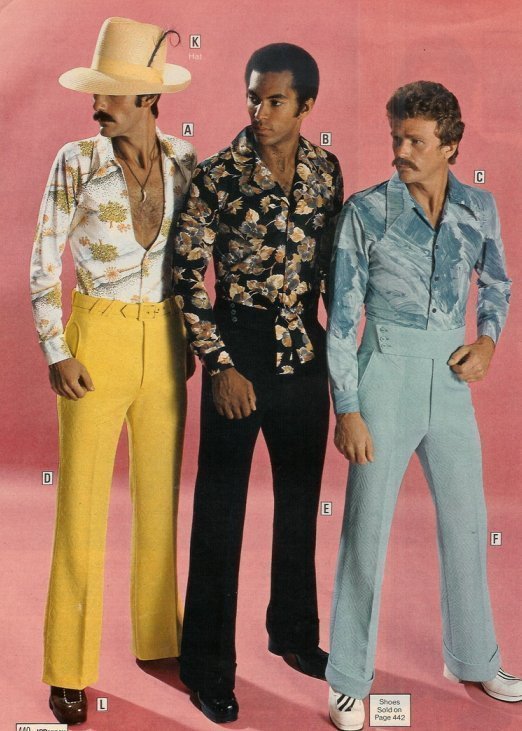
It would be as if a man had never moved beyond his 1970s clothing style. Would you trust him to advise or help in judging your fashion choices? Probably not.

Or a woman who has never done her own make up and hair beyond the 80s style she used in High School and then felt competent to judge her friends attempt at contemporary hair or make up circa 2012. Would she be a trusted advisor and judge? No, she wouldn’t be.

Judgment requires both foundational knowledge and contemporary knowledge to be trustworthy.
______________________
Drawing and commentary by Marty Coleman
Quote by Apelles, 4th Century BCE, Greek painter
______________________
Like this:
Like Loading...
by Marty Coleman | Sep 20, 2012 | Judgment - 2013 |

Raising Kids and Others
One of the big elements of raising healthy kids and helping others grow up into adulthood is to help them understand the true nature of judgment. Kids learn about judgment early on. After all, school is actually more about judgment and placing people in slots of acceptability than it is about formal education.
Consider the Source
I mentioned a number of months ago that my ex-father in law, Dwight Johnson, passed away. I went to the memorial service and spoke briefly at the reception about what he meant to me. One of my favorite lines he used to say was, ‘I just consider the source.’ He was usually referring to me having said some sarcastic remark at his expense. It was his way of saying, ‘Marty’s judgment says way more about him than it does about me so I don’t worry about it.’ He was a wise man.
Are You Vulnerable?
I have a friend who is very, very modest. She is working through why that is, and basically it comes down to feeling vulnerable. Now, my definition of vulnerable is about being at a high risk of something bad happening. She feels that the bad thing that might happen is that someone might say something negative about her body. And the truth is, there is that risk. She is sensitive and it hurts when it happens, whether the person is a jerk commenting on her appearance or figure, or an innocent family member who isn’t even old enough to know how to hurt someone on purpose saying something funny in her bedroom as she changes into her work clothes. So, how does she overcome that? I would tell her to contemplate the napkin quote. Is the comment exposing something about the person saying it, not the person it is directed to? The first person can be blown off as a jerk, easy enough. The second person’s comment, while not being blown off in the same way, can be at least understood as not being purposely hurtful. And think about it, aren’t most judgments coming from one or the other, either a jerk meaning harm or an innocent meaning no harm? If that is the case, then the only ones you really need to worry about are the judgments in between.
The Judgments in Between
What judgments are in between? What judgments are left? Maybe ones you can contemplate and decide for yourself if you agree with them. For example, someone says, ‘That hairstyle makes your face look long.’ Consider it. Does it? Do you mind that it does? Do you see something you hadn’t realized before and maybe agree with? No, you don’t? Then easy enough, you disregard the judgment/comment and go on your way. You do agree? Then easy enough, next time you change your hairstyle you consider styles that don’t make your face look long. In other words, it really becomes your own judgment, your own observation. It’s no longer seen as something hurtful or mean or anything like that. It’s just an observation, neutral in judgment, that you can consider as if it were your own observation.
___________________________
Drawing and commentary by Marty Coleman
Quote by Anonymous
___________________________
Like this:
Like Loading...
by Marty Coleman | Sep 19, 2012 | Art, Censorship - 2012 |
I am going to sell you on the fact that today is #5 in my censorship series.

Back Door Censorship
I love when a quote gets me thinking about something in a completely new way. I had not really considered that creating a market for some things but not others, based on moral judgment, is a back door method of censorship. It’s really not about whether something can sell or not, it’s much more about the powers that be building a market world that only allows certain types of images, books, films, dance, songs, to be distributed and sold.
Here ye, Here ye, Judge Money Presiding
Think about the Ratings Board for Film in the US. What is that but a censorship bureau? I am not saying it’s necessarily a bad thing, but that it is a construction meant to limit the commercial viability of products they deem as ‘too much’ in one way or another. The stated goal of the Ratings Board is to help society know what they are about to see, whether it is appropriate or not. But it also is guaranteeing that any film rated NC-17 will not be distributed widely at all, thus making it’s commercial viability minimal. That isn’t just a by-product of the Ratings Board, it’s one of the main functions of the ratings board, albeit not publicly stated.
Profit within the non-profit
How does a non-profit organization, like a museum deal with this idea? They can’t say the paintings won’t sell, since they aren’t selling anything. But they can say the artwork won’t bring in people to the museum, that it will cause a controversy, that it will offend people, and the result of that? The museum will lose what? Money, that’s what. Now, most museums I have been to make some pretty courageous choices about exhibitions. But they also reject exhibitions because they are not ‘commercially viable’ for their institution, even though their institution is supposedly not commercial.
Basically, behind it all, and around it all, I think the power of money is a huge censorship device. What do you think of this idea?
______________________________
Drawing and commentary by Marty Coleman
Quote by David Mamet, American playright
______________________________
Like this:
Like Loading...