The second half of the quote is ‘because it demands so much attention’. Want to be less lonely? Go do something that REALLY requires your attention, your FULL attention and effort. Throw in other people for good measure.
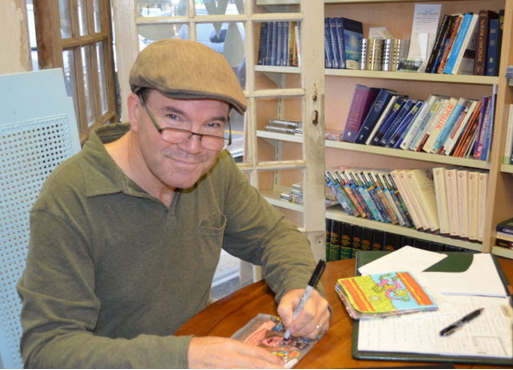
Drawing and commentary by Marty Coleman
“No person is lonely while eating spaghetti.” – Christopher Morley, 1890-1957, American author. This quote is sometimes misattributed to Robert Morley the actor. ……………………………………………………………………………………….
Today is geography Saturday! People from the following cities visited The Napkin Dad Daily in the last 30 days.
Match the city with the country. Not for me, not for a prize. Just for fun and knowledge.
Cities
Kozhikode Nanaimo Watervliet Jyvaskyla Nancy Bandung Brescia Debrecen
Countries
India Finland Hungary Indonesia Italy France Canada United States
The ancient philosopher of day #3 is Confucius. Thanks to Julie Chin, former meteorologist from KJRH, channel 2 in Tulsa, Oklahoma for the suggestion via twitter.
Forgetting and remembering are two edges of a sword. To forget cuts away the bombed out landscape of wrongs from our past. That can be very good. To remember allows us to avoid the ‘wrong bombs’ in the future. That can be very good. So, which is it to be? How do we grow in wisdom and intelligence so as to be protected while not being consumed with bitterness and anger over the past?
I see the difference being in one’s focus. As I have mentioned before, when I was 18 I was blown up and burned in a boat explosion. It was due to overflowing gas. I can tell the story passionately but I don’t retain bitterness or anger about it. But put me in a gas station with some idiot smoking a cigarette and you can be damn well sure I will say something. My remembrance isn’t used to resurrect my pain or what I lost, it’s there so I can do something in the here and now to help avoid similar pain for others.
When I think of the best current example of that I think of South Africa’s Truth and Reconciliation Commission. They asked people to come forth and tell their painful stories of the apartheid era. They didn’t want the stories told to bring about vengeance but to bring about healing. Remembering was a way of saying it wasn’t nothing, it did matter. But they were also saying it is remembered so we can help all of our futures, not so we can condemn and fight each other.
What part of your past are you holding onto with bitterness and anger? Let go of that memory and turn the focus to adding it to your collected wisdom of life. Forget the pain, remember the gain. That is how you will create a healthier and safer future for you and yours.
Are you feeling alone in the world, insignificant and of little use? Become part of a beautiful landscape. Dive into a group, an club, a service. Contribute your time, expertise, muscle, ideas to something that interests you. It does not matter if you think you will be of use. Your probably won’t be of great value at first. But you will be if you stick with it.
Two years ago I started running in an organized group from a running store in Tulsa called Fleet Feet. I was out of shape and started with a group that ran 1 minute then walked 3. It was sometimes tough. I was not contributing much. I was making friends though and encouraging them when I could catch my breath. Now it is 2 years later and I am a coach of that same group. I lead the out of shape people. I direct them to their goal. I contribute in larger ways now than I could have before. I am part of a beautiful landscape of humans working to be healthy and I love that.
Here are some things you can do:
Join a nature group. That could be helping in a urban wilderness area, or helping at a community garden center.
Join a political movement. You want to have passion in your life? Get connected to a cause, you will be surrounded by passion. Just don’t join some stupid group that hates, ok?
Volunteer with a cure group. What runs in your family? Heart disease? Autism? Schizophrenia? Cancer? Make yourself of worth to that group, be part of the cure.
Join a mentor program. What are you good at and love? Do you know how many people need help learning to read? How many kids need help with math?
Help out with animals. No city has enough funds or people to take care of the stray animals they find. No zoo has enough people to take care of the animals and the visitors as they would like. No breed of dog or cat will reject your help in rescuing them.
If you are isolated you can change that. If you are alone and lonely, you can change that. If you are not part of the wider world, you can change that. Take the step. Be part of the beautiful landscape.
“The most beautiful order of the world is still a random gathering of things insignificant in themselves.” – Heraclitus, of which we know nothing. Well, ok. He was Greek and lived 540BCE – 480BCE, but that’s all we know.
Tis a week of Ancient Philosophers it is. Let’s start with Diogenes, shall we?
Diogenes was a slave early in his life. The story goes that when he was on the auction block he pointed to his future owner in the crowd and said “Sell me to that man. He needs a master.” He did get sold to that man and went on to become a well-known bad boy philosopher in Athens. The reason I chose this quote though is not about real slaves and owners, it’s about how to master those traits that enslave you. You can hope to get rid of a trait or a habit, and that is best in many cases such as cigarettes and alcohol. But if we are honest with ourselves we are not going to get rid of all our traits and habits, even the bad ones. We are going to live with them. The key is figuring out how to master them and bend them away from negativity and destruction.
Let’s talk eating for example. You can’t not eat. You can’t take it out of your life. You have no option but to let it control you, or you control it. If you were a slave (to the master named food) and you wanted to actually become the master of that master how would you go about it? Would you do as Diogenes did and announce to the world that you were going to be the master? Or would you be more subtle and slowly, but with strong intent, design the life of that master in such a way that you controlled everything he did, everywhere he went, everyone he saw.
Think of it that way and perhaps it will give you a new perspective. And here is the best part. Your master, be it food or something else, is actually pretty dumb. It will allow you to take control of it if you have the will to do so. It’s not up to food, it’s up to you.
“The art of being a slave is to rule one’s master.” – Diogenes, 404 BCE – 323 BCE, Greek philosopher. Famous for the story where he went looking for one honest man in Athens and couldn’t find one, even with a lamp in broad daylight. Thanks to one of my favorite quote book authors for this info. James Geary, author of ‘Geary’s Guide to the World’s Great Aphorists’.
In honor of the unofficial first week of summer, let’s indulge in some heat!
We spent Memorial Day weekend deep in the heart of Texas moving our daughter from an apartment to a house. It included massive amounts of moving, painting, organizing, and cleaning. We all worked hard for 4 straight days to make it happen. It was fulfilling.
It was also hot as hades down there! Summer has arrived in the middle of the US with a vengeance. We would walk out into the sun and feel like we were in a broiler. It was hot and humid and searing. And I loved it.
This is the essence of art. This is the most important truth about being an artist. This is the single indispensable characteristic for creating art.
It is simple, and to teach it is simple. To be an artist, you have to admit who you are. You have to tell the world you love naked people. You have to tell the world you love the color red and only red. You have to tell the world you love the smell of oil paints more than the smell of food. You have to tell the world you love the discarded cutting from the bottoms of the flowers more than the flowers. You have to tell the world you love flowers so much you hate that you aren’t one. You have to tell the world you like asphalt more than grass.
In other words, you have to admit your passions, no matter how absurd, silly, perverse, scary or mundane they are. Do that and find YOUR way of expressing them, and you will be an artist.
This is how my mind works. I liked the quote. It reminded me of the artists Millet, Courbet, et al and their finding beauty in the humble everyday lives of peasants, something not the seen as worthy of artistic contemplation until their generation came along.
Then I thought of how to draw it and I thought of our cookie baking pans. Old, black, brown, scratched, antiqued pans that I just gave to my daughter to use after we bought some new ones. I will draw those buried in the back of an old junk/antique store I thought. Good illustration of finding something of little value but beautiful in it’s old way.
When I started drawing them under an old rickety staircase to increase the feeling of them being hard to find I thought of a fantastic story of serendipity that happened to me and my father a few years ago. So, what started out as a napkin about art expanded into a story about anyone, not just artists, finding value and meaning in humble places and humble objects.
Read ‘The Amazing Gift’ below to find out more about the story. Trust me, it’s worth reading.
Drawing and commentary by Marty Coleman
“Blessed are they who see beautiful things in humble places where others see nothing.” – Camille Pissarro, 1830-1903, French painter, impressionist leader, mentor to Cezanne and Gauguin
This certificate was given to my father in 1956. I gave it to him again on Christmas Day, 2005, 49 years later. Here is the story of how it came about.
He was pretty famous as an aviator over his career and so I thought it would be fun to ‘google’ him while he sat beside me at the computer. We did so and found all sorts of references to him and the airplane he flew in 1955, the XFY-1 Pogo, the first vertical take-off airplane.
Among the google references was an odd one from Geneology.com. All the entry said was ‘Has anyone ever heard of J.F. ‘Skeets’ Coleman?’ That was all.
I wrote back and said “I am his son. If I may enquire, why are you asking about him?” The gentleman responded and said “I love to go into antique stores around where I live in Leesburg, Virginia. I see many certificates and documents with names on them and often wonder who is that person, do they know the document is here, how did it get here? etc. I happen to see a document that had your father’s name on it and thought I would ask around.”
He remembered the certificate had an X on it, and his name but nothing else. He also wasn’t quite sure what antique store he had seen it in. I asked him to see if he could find it again for me. He came back a few days later with the name of the store, which I immediately called. They still had it downstairs in the basement, in a dark corner, under a staircase. How he ended up seeing it, who knows.
We of course were wondering how it ended up in a store in Virginia of all places. Then I remembered that back in 1956 we had moved to Hagarstown, Maryland. We only stayed a few years, moving back to California in 1959. All we could figure is that somehow my mom and dad had left this certificate behind and it had found it’s way to the antique store. My family also lived in the same region in the early 70s and so it could have been left at that time as well.
I immediately purchased it and had it shipped. I wrapped it and under the tree for Christmas. I gave it to him at the end of all the presents. It was from ‘Cyber Santa’. I told him the present came from Cyber Santa because without the internet we never would have found what he is about to get. I told him it was old but was one of a kind, only could be given to him and him alone. He was 87 at the time and I wasn’t sure if he would even know it had been missing for so long! But when he opened it he was very moved and exclaimed, ‘Where the hell has this been all these years’! It was a great reunion moment of person and an object of meaning in his life.
I love this story.
The certificate is honoring my father as a founding member
of The Society of Experimental Test Pilots
Older kids sometimes want to leave. Sometimes really badly. They feel grown up, they feel trapped, they feel more adult than the parents. They feel misunderstood, not trusted, not respected, not treated fairly. But they can’t leave. They don’t really want to. So, what do they do? Hopefully they turn to art. Better than drugs or other destructive escapes.
Do you help them turn to art? Do you encourage it in your kids or friends or the ones you have in your school or youth group or just out and about? Do you help them find their voice in creativity? Do you show you are proud of their artistic accomplishments, do you hold that in high value?
Art allows them exploration, growth and discovery. It allows them to process their feelings, angst, anger, feelings of being different and alone. It is a bridge into adulthood and self awareness. It is comfort.
I love quotes that surprise me with their idea. I hadn’t really thought about the idea of art influencing how I looked at nature in quite this way. I can see how art I have looked at over the years, that I have admired, has helped me see the natural world. It helps me see the organization and order, the chaos and confusion, the transitions of color and texture and material.
“I wonder whether art has a higher function than to make me feel, appreciate, and enjoy natural objects for their art value.” – Bernard Berenson, 1865-1959, American art historian
David and Goliath is the drawing but I am going to talk about baseball.
My favorite moment in all of baseball history was October 15, 1988. It was the World Series, the Oakland A’s vs the Los Angeles Dodgers, game 1. The A’s were heavy favorites to win the game and the series. I believe everyone on both teams and all their fans thought their team could win at the beginning of the game. But I doubt that the many of the Dodger fans believed it when they were losing 4-3 in the ninth inning. After all, the best player they had was out for the entire series. He wasn’t in the dugout, he was in the training room, not able to play. It was hard to believe it when there were 2 outs and the best relief pitcher in all of baseball, Dennis Eckersley, was throwing his best stuff.
It was still hard to believe it when the star who couldn’t play because of a bad knee and a bad hamstring, Kurt Gibson, came out of the dugout to pinch hit for the pitcher. Not many believed. They hoped, but the didn’t believe. But Gibson believed. He tells the story of being in the training room, his knee on ice the entire game, imagining the scenario where he might be able to bat in the 9th inning. He spent the entire game believing that if the chance arose he could bat. And it came to pass as he imagined. Even with a full count Gibson believed he could do it. He also believed he could read the pitcher. He knew what type of pitch Eckersley was going to throw. When that pitch came, Gibson hit the most improbable home run ever to win the game. Not only did that hit win the game, but it so demoralized the A’s that the Dodgers went on to win the World Series. Gibson never played another inning of the series.
Gibson didn’t pay attention to what another person said. After all, it wasn’t their bat, their glory, their moment. It was his. He knew that what mattered wasn’t how strong he was, or how fast he was. What mattered is he believed he could do it.
“Life’s battles don’t always go to the stronger or faster man. Sooner or later the one who wins is the one who thinks he can.” – Vince Lombardi, 1913-1970, Football coach, Green Bay Packers